
A New Undersea Cable Called Petal Will Carry Huge Amounts of Internet Data
The 4,300-mile cable between the U.S. and France is planned to start working in 2029.
A new fiber-optic cable will soon lie on the floor of the Atlantic Ocean. Live Science reports that the cable, called Petal, will run about 4,300 miles (7,000 kilometers) between the United States and France. It is planned to move data at up to 1 million gigabits per second, which is enough to send around 125 terabytes every second. That equals roughly 25,000 HD movies, at 5 gigabytes each. Meta, the company that owns Facebook and Instagram, will pay for it and operate it.
Petal is due to start working in 2029. Meta says it will be the first cable of its kind to reach petabit capacity across an ocean, which is double the capacity of existing undersea cables of this length. That is enough, the company says, to let 75% of the world's population stream music at once.
It will also be the first commercial undersea cable to use multi-core fiber. Normal fiber strands usually have one core, but each strand in Petal will have two cores that carry light signals in opposite directions, so one strand can do the work of two ordinary ones. Each strand is about as thick as a human hair, just 125 micrometers across. Petal will have 24 pairs of dual-core fibers, which makes 96 cores, so it can carry as much data as 48 regular pairs.
The Japanese company NEC will design and build the whole system, and Sumitomo Electric will supply the fiber. An NEC executive called reaching petabit capacity across an ocean a major milestone in the history of global communications.
Why does this matter? Undersea cables are a key part of the internet. According to the International Telecommunication Union, the United Nations agency for digital technology, they carry about 99% of the world's internet traffic.
Laying thousands of miles of delicate glass cable on the seabed is a big engineering job. It is also hard to keep tiny pulses of infrared light strong over such a long distance. Cables solve this with repeaters, amplifiers placed along the route that use lasers to boost the signal. A 4,300-mile cable like Petal needs about 100 of them.
About this story
Source: Live Science. Spotted a mistake? Tell us.
More in Science
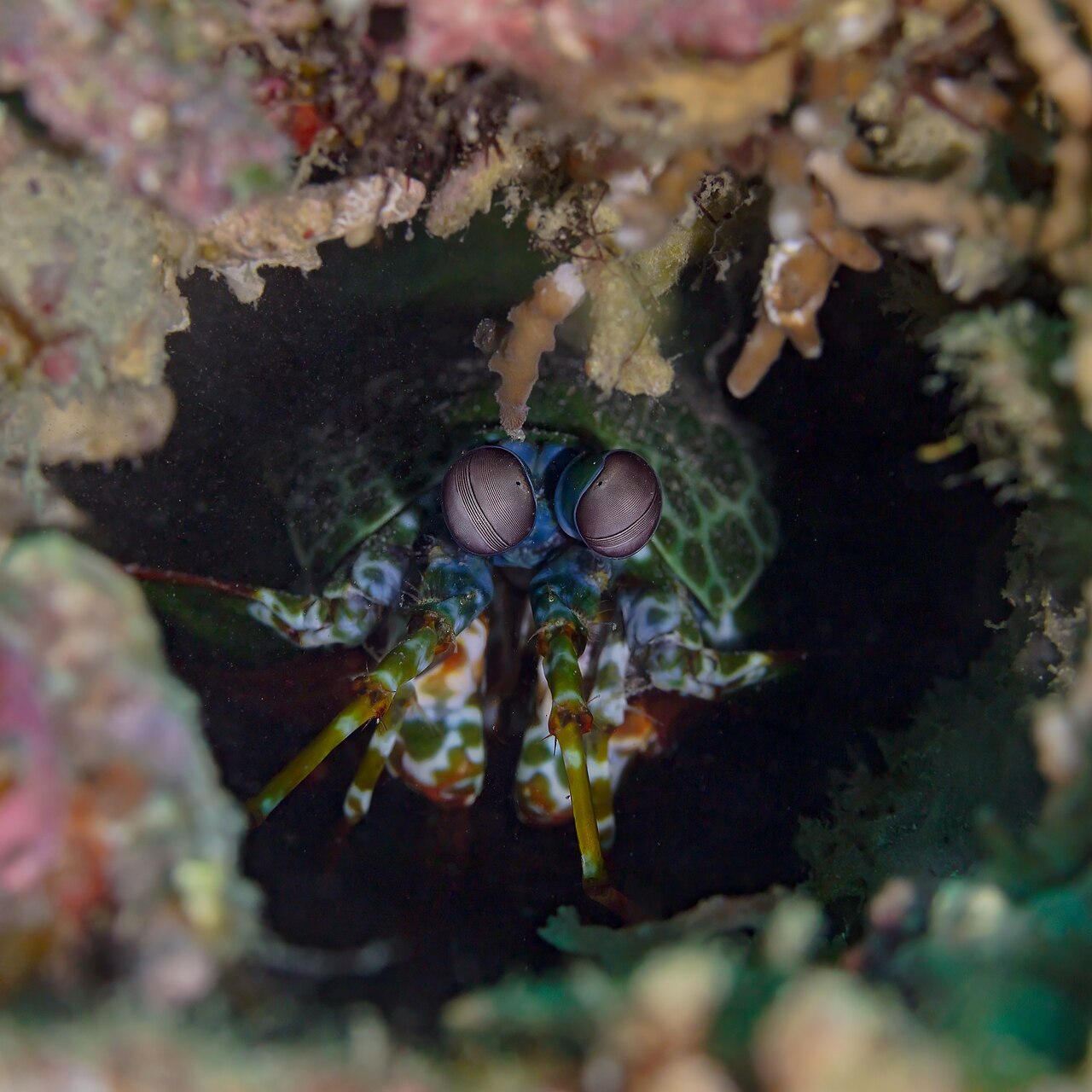
Mantis Shrimp Eyes Contain Pigments That Switch Back and Forth Like Light Switches
Scientists found that some of the animal's vision pigments see red light that few animals can detect.

A Study of 38,467 Songs Finds Lyrics Have Become Less Emotional
Michigan State University researchers looked at songs from 230 artists between 1947 and 2024.

Was There Ever a Mountain Taller Than Mount Everest?
Geologists say nobody knows for sure, but ancient mountain ranges may have been huge.