
Scientists Find a Hormone in Spiny Dogfish Sharks That Experts Thought Sharks Lacked
A study in Canada detected cortisol in the blood of a small shark species.
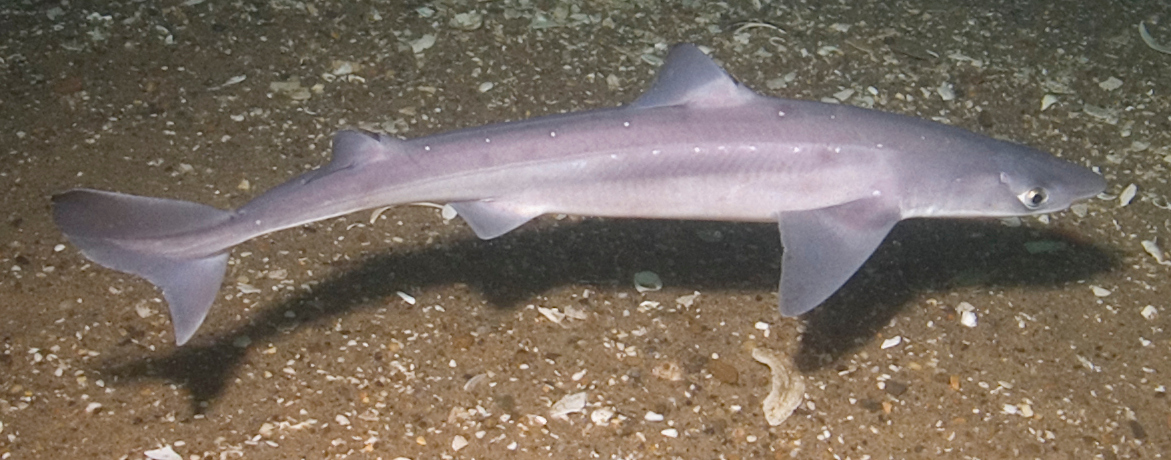
Cortisol is a hormone that helps people and many other animals manage their energy and respond to changing conditions. For a long time, scientists believed sharks and rays did not make cortisol and used a different steroid hormone instead. Phys.org reports that a new study of North Pacific spiny dogfish, a small kind of shark, challenges that idea.
Researchers at the University of Manitoba and the Bamfield Marine Sciences Center in Canada found cortisol in the sharks' blood after experiments with diluted seawater or antibiotics. Their paper in Proceedings of the Royal Society B also gives molecular hints that the sharks can make it. The results are for one species, so it is not yet known whether other sharks and rays can do the same.
The old idea came from research in the 1960s and 1970s. Scientists found a similar hormone, called 1α-hydroxycorticosterone, and suggested that earlier cortisol measurements had mistaken it for cortisol. To avoid that mistake, the team first separated the parts of the blood samples with a method called high-performance liquid chromatography, and a second test confirmed cortisol in two samples.
In one experiment, dogfish caught off British Columbia were kept in diluted seawater for 48 hours and then returned to normal seawater. Before the exposure, cortisol was found in only one shark. Of five sharks followed through recovery, all had detectable cortisol after 36 hours, but only one did at 72 hours. That on-and-off detection could explain why earlier studies missed it. The team also looked at the interrenal gland, an organ that makes steroid hormones, and found genetic messages for an enzyme involved in making cortisol, though they did not test whether the enzyme works in the tissue.
The experiments were prompted by earlier findings that diluted seawater and antibiotics can disturb microbes in the sharks' gut. The scientists wondered whether bacteria in the gland change cortisol and limit how much reaches the blood. In another experiment, dogfish got antibiotics or seawater by a feeding tube for five days. Three days later, cortisol could be detected in the antibiotic group but not in the comparison group. The researchers note that statistical tests did not show a significant effect, and that not detecting a hormone does not prove it is absent. Handling and tube feeding could also have caused a hormone response.
More in Animals

A Big Genetic Study of Cat Cancer Finds Surprising Links to Human Cancer
University of Guelph researchers studied tumors from almost 500 cats and say the results could help both species.
A Humpback Whale Mother Stayed Near Her Calf for Hours, Scientists Report
Researchers say the rare sighting off Australia's Gold Coast may offer clues about whale emotions.

Scientists Find a Hidden "ID Card" in Cat Urine
Japanese researchers say 13 unusual fatty acids may let cats recognize each other long after a scent is left.